
In the age of climate change, any individual’s effort can feel reductive, but this was not the case for Michael Succow, who turned 85 last week. I first encountered his story when I co-founded ZukunftMoor, a startup that re-wets drained peatlands in Northern Germany. I met Succow himself once, and since the startups’ founding, we have worked closely with his team and colleagues across the Succow Foundation, the Greifswald Mire Centre, and the University of Greifswald. All three work closely together in peatland research and constitute one of the leading peatland science initiatives in the world.
Yet, it was only when I stumbled upon a new German-language documentary about Succow’s life that I truly began to understand how extraordinary his achievement was and how close it came to never happening at all. The odds were pitted so badly against him.
Succow was born in 1941, so at the creation of the German Democratic Republic, he was a young child. He grew up under the communist regime of the Socialist Unity Party of Germany (SED) and lived in the GDR until its disintegration and reunification with West Germany.
Indeed, there are two important things one has to know to understand Michael Succow. Firstly, he was always an outsider to the system, and second, he was a devoted lover of nature. The regime continually tried to entice Succow to join their side, attempting to recruit him to spy on his fellow students while at university (in vain) and later by trying to force him to enter the party (in vain). He was such a talented biologist and fervent nature activist that he grew to become too important to ignore and, frankly, impossible to sideline. One pivotal research trip to Mongolia, where he witnessed first-hand the deep respect that local communities had for the natural world, left a lasting mark on him.

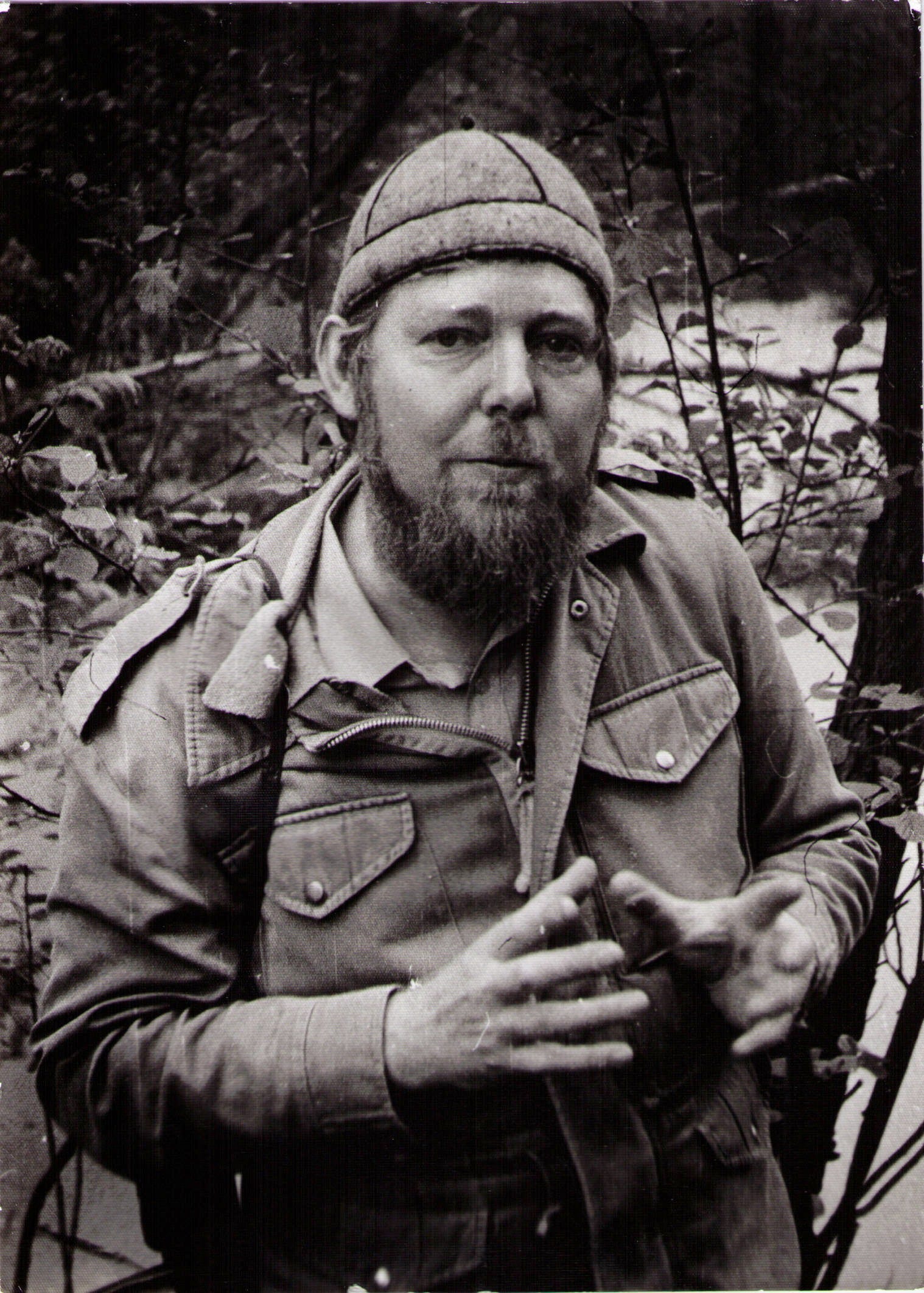
During most of the existence of the GDR, Michael Succow worked tirelessly with his peers to protect the natural world, but their real influence was limited. This photo shows Michael Succow in 1984 in Plagefenn, a peatland which would later become part of a biosphere reserve he would help to create. Photo credit: Archiv Michael Succow Stiftung.
In the 1980s, he was part of a group researching the extreme damage that Eastern German industry was having on nature (while the official government line maintained that only capitalist systems polluted the environment). The group did what they could, but their real influence was limited. The dream was always to create national parks, where nature would be untouched.
Ultimately, there was no way that this would happen for as long as the SED was in power.
In early 1990, everything changed. As the regime collapsed, Succow was chosen to be vice minister of environment by the democratic movement, precisely because he was an outsider with impeccable credentials. He realised this would be his one chance.
He set out to establish several national parks by law before a reunification with West Germany.
Once the laws were enacted, they would be impossible to reverse and would automatically become embedded in the statutes of the Federal Republic.
But if he was too slow, the project would fail. He knew there were powerful interests in the West that would seek to prevent any such large-scale environmental initiative, namely, the federal transport ministry and industrial lobby groups.
The task was not trivial. Creating entrenched laws required perfectly crafted legal texts and clearly defined borders, setting the national parks and conservation zones. It was round-the-clock work in a small team who were also frantically travelling to locations to ascertain the right demarcation points.
Succow and his friends made it happen, but only just. Reunification came much faster than anyone expected. Western interests had already tried to block him before it occurred, but others, such as the West German environment minister Klaus Töpfer, supported him. The GDR’s national park program, which designated 5% of the GDR’s land mass into five national parks, six biosphere reserves, and three nature parks, was one of the final formal acts of the East German cabinet. Succow’s dream had come true.

Michael Succow (on the left, holding maps) touring the prospective national parks with West German Environmental Minister Klaus Töpfer, shortly after reunification in 1991. Photo credit: Archiv Michael Succow Stiftung.
This is an extraordinary story of an individual succeeding against the odds. It also reminds us that single people can and do change the course of history, even when powerful forces are up against them. The fact that Michael Succow’s story is not more widely known is a puzzle to me. Perhaps the film and his recent autobiography will change that.